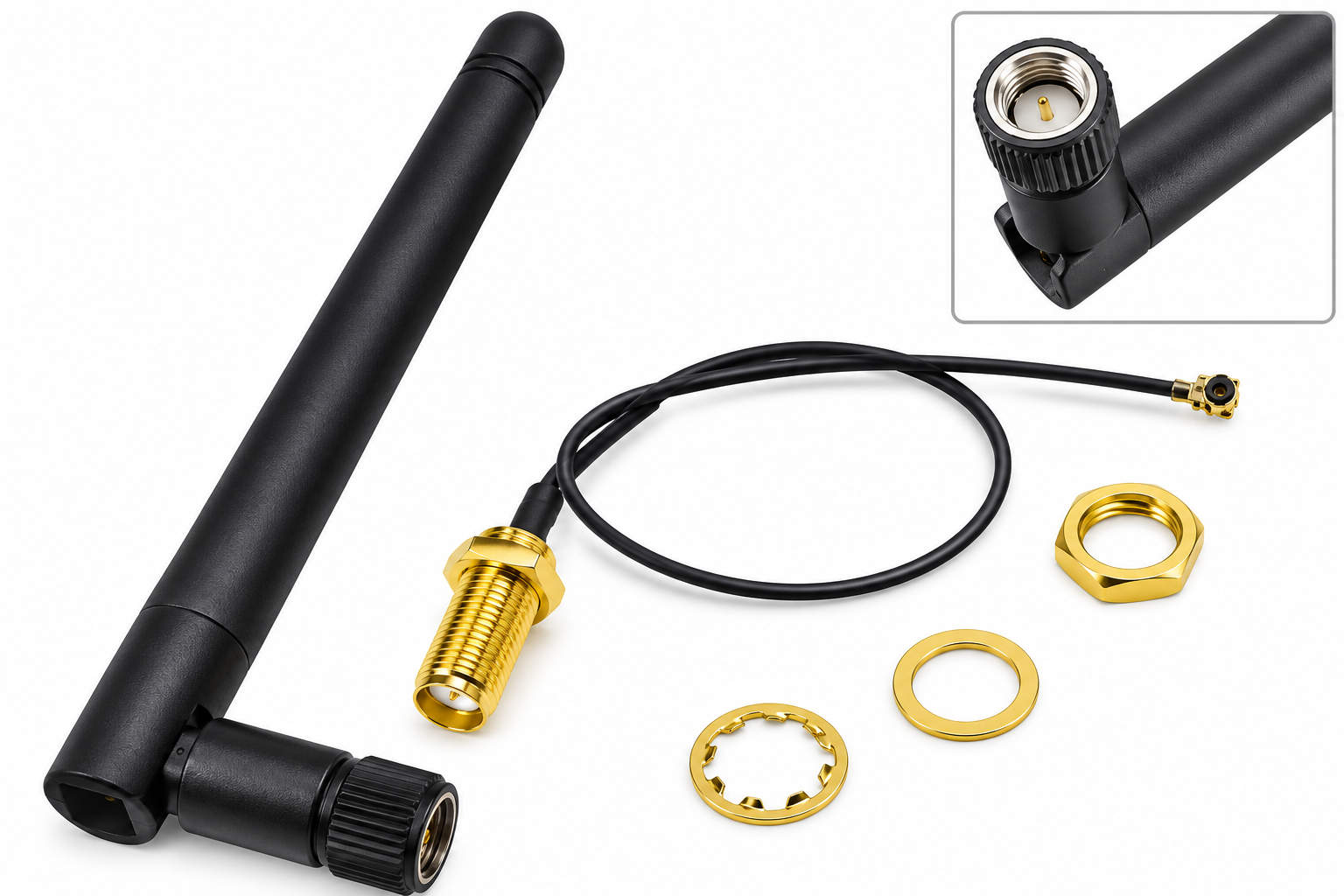
A Wi-Fi + BLE Antenna is an antenna designed to transmit and receive wireless signals for both Wi-Fi and Bluetooth Low Energy (BLE) protocols. Because standard BLE and the most common Wi-Fi band both operate over the 2.4 GHz ISM frequency band, a single well-matched antenna can seamlessly serve both technologies.
How One Antenna Handles Both
• Shared 2.4 GHz Spectrum: Both Bluetooth/BLE and basic Wi-Fi (802.11b/g/n) utilize the exact same 2.400 GHz to 2.4835 GHz frequency range.
• Dual-Band Capabilities: Modern Wi-Fi/BLE combo antennas are engineered as "dual-band" antennas, meaning they efficiently support 2.4 GHz (for BLE and standard Wi-Fi) as well as 5 GHz / 6 GHz bands (for high-speed Wi-Fi 5, 6, and 7) simultaneously.
Common Form Factors
Depending on your project hardware design, these antennas generally fall into two categories:
1. Internal / Embedded Antennas
• PCB (Printed Circuit Board) Antennas: Rigid, small green or black boards that mount inside a device's enclosure. They connect to the wireless module via a tiny RF coaxial cable using an IPEX, U.FL, or MHF mini-connector.
• FPC (Flexible Printed Circuit) Antennas: Micro-thin, flexible sticker-like adhesive patches. They can be peeled and stuck directly to the plastic inside walls of an IoT device casing, saving space while optimizing signal layout.
2. External Antennas
• Rubber Duck / Whip Antennas: Standard, adjustable plastic omnidirectional sticks that screw directly onto an external RF port. They generally terminate in standard SMA or RP-SMA threaded connectors.
• Applications: Typically chosen for routers, industrial gateways, or PC network expansion cards where internal metallic components block signal waves, requiring an external node to push maximum range.
.jpeg)